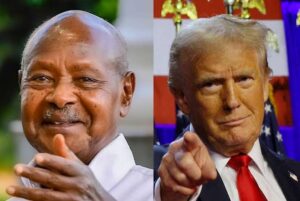
You Did A Great Job, Thanks For Chasing Them Away, Museveni Appreciates Donald Trump On Mass Deportation
President Yoweri Museveni has openly praised former United States President Donald Trump for his tough immigration policies, especially the mass deportation of undocumented immigrants. Speaking at a political rally in Arua City, Museveni thanked Trump for what he described as “chasing away wanderers” from America. His remarks have sparked debate both at home and abroad, especially among Ugandans living in the diaspora.
Museveni said he personally likes Donald Trump because of his clear message to foreigners not to go to America illegally. According to Museveni, Trump’s deportation policy sends a strong lesson to Africans and other migrants who leave their home countries in search of opportunities abroad. He argued that people should stay in their countries and work hard to develop them instead of roaming the world.
During his speech, Museveni questioned why Ugandans choose to leave their country when Uganda has many untapped opportunities. He said he has never had the desire to go and live in another country and does not understand why others do. In his view, migration is often driven by a wrong mindset rather than lack of opportunity.
He used strong language, calling migrants “wanderers” who move from country to country without building anything meaningful at home. Museveni said Trump’s actions would help such people rethink their choices and focus on developing their own nations. His comments were received with cheers from some supporters and concern from others.
The Trump administration has recently intensified deportations, affecting thousands of immigrants from different countries, including Uganda.
In addition to deportations, the US government has also introduced stricter visa conditions and visa bonds for some countries. Ugandans are among those affected by these new restrictions.
Many Ugandans living in the United States are now facing uncertainty as deportation threats increase. At the same time, the Ugandan government is working on an agreement with the US to receive deportees removed by American authorities. This includes third-country nationals who may not be granted asylum in the US and are unwilling to return to their home countries.
Last year, the Permanent Secretary of the Ministry of Foreign Affairs explained that this agreement is temporary and meant to address a difficult international situation. However, the arrangement has raised questions about Uganda’s role in global migration management and the burden it may place on the country.

While defending deportations, Museveni shifted focus to job creation at home. He insisted that Uganda has enough opportunities, especially in agriculture and services, for young people to earn a good living. He said unemployment is not always caused by lack of jobs but by refusal to engage in productive work.
To support his argument, Museveni shared a success story from the Busoga sub-region. He talked about a formerly jobless man whom he helped to start a poultry project. According to Museveni, the farmer now earns about Shs20 million per day from poultry farming.
Museveni explained that this income translates to Shs600 million per month and about Shs7.2 billion per year. He emphasized that such money is earned right in Uganda, not in Dubai or America. He used this example to show that wealth can be created locally with the right mindset and support.
The President questioned why Ugandans abandon fertile land and a good climate to seek work in harsh foreign environments. He praised regions like West Nile and Zombo for their beautiful climate and agricultural potential. In his view, Uganda offers better natural conditions than many countries Ugandans migrate to.
Museveni encouraged citizens to invest in agriculture, trade, and small businesses instead of chasing foreign jobs. He mentioned boda boda riding, taxi operations, and service businesses as sectors that can absorb many unemployed people. According to him, dignity comes from work, not from where one works.
However, Museveni’s comments appear to contrast with government policy on labor export. In the past, he said exporting labor is not his idea of job creation. Despite this, the government has signed agreements with Middle Eastern countries to send Ugandan workers abroad.
Labor export has become a major source of foreign income for Uganda. Last financial year, Ugandans working mainly in the Middle East sent home about $1.6 billion in remittances. This money plays a big role in supporting families and boosting the national economy.

Diaspora remittances are now among the top three sources of foreign exchange for Uganda. This reality shows how important Ugandans abroad are to the country’s economy, even as leaders criticize migration. This contradiction has left many citizens confused.
At the same time, many Ugandans in the diaspora, especially in the Middle East, have complained of inhumane treatment. Reports of abuse, exploitation, and poor working conditions are common. These experiences fuel the debate about whether labor migration truly benefits Ugandans.
Museveni’s praise of Trump has therefore reopened a sensitive national conversation. On one side are those who believe Ugandans should stay home and build the country. On the other are those who argue that migration is sometimes a survival strategy, not a choice.
Critics say deportations cause suffering to families and waste human potential. Supporters argue that forced return may push people to invest their skills at home. The issue remains deeply divided, with strong emotions on both sides.
What is clear is that migration, deportation, and job creation are now closely linked in political debate. Museveni’s message is simple: Uganda has opportunities, and Ugandans should believe in their country. Whether this message matches economic realities for all citizens is a question many continue to ask.
As deportations increase and global immigration rules tighten, Uganda faces a major challenge. The country must create real, sustainable jobs to absorb returning migrants and prevent future migration. Without this, the debate may continue long after the rallies end.