Why Museveni is key for regional stability
Museveni’s Mediation Role in Sudan and the Quest for Regional Stability Can’t be Taken for Granted
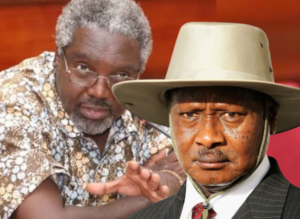
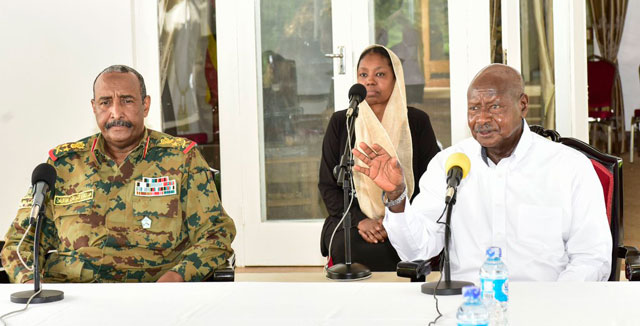
COMMENT | OBED K KATUREEBE | In November 2025, the African Union (AU) appointed President Yoweri Museveni to mediate the conflict in Sudan. This war has plunged the country into one of the gravest humanitarian crises in recent history. The conflict, which began in April 2023, has claimed more than 24,000 lives and displaced over 13 million people. It sets the Sudanese Armed Forces (SAF), led by Gen. Abdel Fattah al-Burhan, against the Rapid Support Forces (RSF) commanded by Gen. Mohamed Hamdan Dagalo.
The AU believes President Museveni’s long experience in regional diplomacy makes him a suitable choice to lead mediation efforts, especially after several international initiatives failed to bring the warring parties to the negotiating table. Under this mandate, President Museveni is expected to urge an immediate cessation of hostilities, facilitate the opening of humanitarian corridors, and promote inclusive political dialogue aimed at restoring peace, stability, and national reconciliation in Sudan.
In March 2025, President Museveni also deployed the Uganda People’s Defence Forces (UPDF) to South Sudan at the request of President Salva Kiir Mayardit. This intervention followed deadly clashes in which soldiers loyal to then Vice President Riek Machar mutinied and killed troops loyal to President Kiir in Nasir and parts of Juba.
At the time, South Sudan stood on the brink of another devastating civil war that would likely have collapsed the government and created yet another failed state in the region. The UPDF remains deployed as regional leaders continue to pursue a lasting political solution through dialogue.
South Sudan has lived on the edge of instability since the death of its founding leader, Dr John Garang, in a plane crash on July 30, 2005. His successor, President Salva Kiir, has struggled to build a cohesive leadership with his former deputy, Dr Riek Machar, whose political ambitions have repeatedly fuelled internal conflict. The country’s fragile tribal dynamics have further deepened divisions, leaving scars that may take generations to heal.
The Dinka, led politically by President Kiir, often view themselves as the principal architects of South Sudan’s liberation struggle, having sacrificed immensely in the fight against domination from the Arab north. They accuse the Nuer, led by Dr Machar, of collaborating with the Khartoum regime during the war. Conversely, the Nuer regard themselves as more educated and internationally exposed, pointing to Dr Machar’s academic credentials, including a PhD in strategic planning, as evidence of his suitability to lead the country. What South Sudan urgently needs, however, is a reconstituted and professional national army, guided by patriotism rather than ethnic/tribal loyalties.
Despite repeated calls for the Intergovernmental Authority on Development (IGAD), the African Union, and the European Union to deploy peacekeeping forces before the eventual withdrawal of the UPDF, little tangible action has been taken. As a result, Uganda has shouldered a disproportionate burden in preventing what could have escalated into genocide. Ironically, rather than being commended, some actors, both within the region and internationally, have accused President Museveni of being a partisan actor in the South Sudan conflict. This narrative is far from the truth.
As efforts intensify to restore peace and stability in both Sudans, President Museveni deserves the support of all peace-loving global actors. The two countries remain the “sick men” of the region and require sustained international attention and assistance.
Beyond Sudan and South Sudan, Uganda continues to play a stabilising role elsewhere in the region. The deployment of the UPDF in Somalia and the eastern Democratic Republic of Congo (DRC) is yet another sacrifice aimed at restoring peace. Somalia, once considered a failed state dominated by clan militias and Al-Shabaab terrorists, is steadily rebuilding, thanks in part to Uganda’s contribution alongside other partners.
In eastern DR Congo, the UPDF, at the invitation of the Kinshasa government, entered Ituri Province in November 2021 and dismantled Allied Democratic Forces (ADF) cells responsible for mass killings and displacement. Working jointly with the Armed Forces of the Democratic Republic of the Congo (FARDC), the UPDF has helped restore relative stability, allowing communities to return home and cross-border trade between Uganda and DR Congo to flourish once again. The spirit of Pan-Africanism will forever be his DNA. The reason why Ugandans should, without blinking an eye, vote for the man with a hut on January 15th 2026.
***
 The writer is the acting executive director of the Uganda Media Centre.
The post Why Museveni is key for regional stability appeared first on The Independent Uganda:.