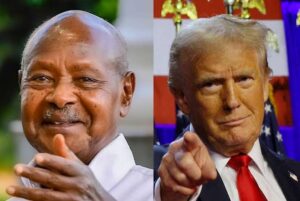
I Appreciate Trump for chasing you people Away From America, Come Develop Your Country Instead- Museveni Declines Visa Negotiations With USA On Behalf Of Ugandans
President Yoweri Museveni has sparked strong reactions after openly praising former U.S. President Donald Trump for tightening immigration policies that affect Ugandans. Speaking at a public rally, Museveni said he appreciates Trump for “chasing away” people who do not care about developing their own countries.
According to him, this pressure is a wake-up call for Africans to focus on building their nations instead of rushing abroad. His words immediately drew applause from some supporters and criticism from others.
Museveni made it clear that he will not enter visa negotiations with the United States on behalf of Ugandans who want to travel there. He said Uganda should not beg for access to foreign countries when there is so much work to be done at home.
In his view, migration has drained Africa of skilled and energetic people who could transform local communities. He insisted that development begins when citizens believe in their own country.
The President’s remarks come at a time when it has become very difficult for Ugandans to obtain U.S. visas. Reports indicate that applicants are required to provide a surety fee of up to 15,000 dollars at the American Embassy in Nsambya. This condition has effectively locked out many ordinary Ugandans who cannot raise such an amount. As a result, only a small number of wealthy or well-connected individuals can even attempt the process.
Museveni argued that these strict requirements should not be seen as punishment, but as an opportunity. He said when people are blocked from leaving, they are forced to think differently about their future. Instead of dreaming of America or Europe, they begin to look for solutions at home. According to him, this mindset is exactly what Uganda and Africa need.
At the rally, Museveni spoke bluntly, using strong language that reflected his frustration with what he called “dependency thinking.” He said too many people believe success only exists outside Africa. This belief, he added, has weakened local industries and discouraged innovation. By staying, learning, and investing locally, citizens can create jobs and wealth within the country.
Supporters of Museveni’s position say he is right to push for self-reliance. They argue that countries like China and India developed by focusing inward before expanding outward. In their view, Africa will never rise if its best minds keep leaving. They believe the President’s message is tough, but necessary.

However, critics see the issue differently. They argue that many Ugandans seek visas not because they hate their country, but because of limited opportunities at home. Unemployment, low wages, and corruption push people to look elsewhere. For them, travel is not betrayal, but survival.
Some Ugandans also feel that praising foreign leaders for restricting Africans is insensitive. They say such policies often lead to discrimination and hardship for ordinary people. Students, professionals, and families are affected, even when their intentions are genuine. To them, government should fight for easier movement, not celebrate barriers.
The 15,000-dollar surety fee has become a symbol of inequality. It clearly separates the rich from the poor, deciding who can travel and who cannot. Many see it as unfair and unrealistic for a developing country like Uganda. This has fueled anger and debate across social media and public spaces.
Museveni, however, insists that dignity comes from building one’s own nation. He said Africa has land, people, and resources that are enough to support development. What is missing, according to him, is discipline and commitment. He challenged young people to channel their energy into farming, industry, and technology.
He also warned against what he called the “brain drain.” When doctors, engineers, and teachers leave, the country loses critical skills. Training these professionals costs the government and families a lot of money. When they leave, the benefits are enjoyed by foreign countries instead.
The President’s message fits into his long-standing call for economic nationalism. Over the years, he has encouraged local manufacturing, value addition, and regional trade. He believes Uganda should reduce dependence on foreign aid and imports. Staying home, in his view, is part of this bigger vision.

Still, many Ugandans say the government must first create an environment where staying makes sense. They want better infrastructure, fair laws, and equal opportunities. They argue that patriotism grows when citizens feel respected and supported. Without these, speeches alone will not be enough.
The visa issue has also reopened discussion about global inequality. Powerful countries control borders while benefiting from resources and labor from poorer nations. Some observers say this system is unfair and needs reform. Others say every country has the right to protect its interests.
Museveni’s praise for Trump has therefore become more than just a comment.
It reflects a wider debate about migration, development, and national pride. It raises difficult questions about freedom of movement and responsibility to one’s homeland. These are issues many African countries are struggling with.
For the youth, the message is especially heavy. Many feel caught between hope and frustration. They want to contribute to Uganda’s future, but also want a decent life. Balancing these dreams is not easy.
As the debate continues, one thing is clear: Museveni has chosen a firm stance. He believes Uganda’s future will be built by those who stay, not those who leave.
Whether this approach will inspire growth or deepen frustration remains to be seen.
In the end, the controversy highlights a painful truth. Development is not just about borders and visas, but about opportunity and trust.
If Uganda can offer real chances for success, fewer people will look outside. Until then, the conversation about leaving or staying will continue to divide the nation.