Ugandans go to the polls
Time to choose: continuity or change
COVER STORY | THE INDEPENDENT & AGENCIES | When Ugandans go to the polls on Thursday, they will be voting under the watchful presence of the government, with army boots already visible on the streets of the capital, Kampala, a deployment security chiefs say is meant to bolster security but which critics view as a warning to dissent.
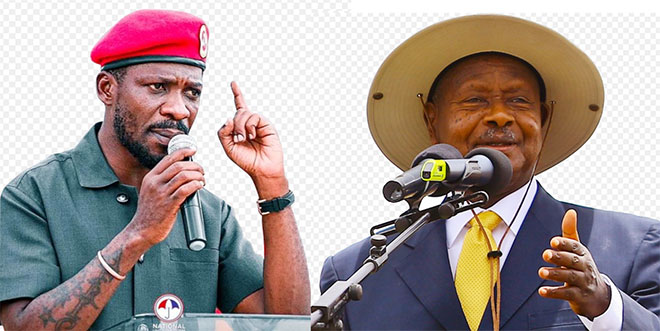
The election presents voters with a stark choice: extending the rule of President Yoweri Museveni, now 81 and in power since 1986, into a fifth decade, or backing an opposition challenger who has harnessed frustration among young Ugandans eager for political and economic change.
Museveni, seeking a seventh consecutive term, is facing his most prominent challenger in Bobi Wine, a 43-year-old pop star turned politician whose rise has reshaped Uganda’s opposition landscape. Their contest is widely seen as the defining battle of the election, even as six other candidates remain on the ballot.
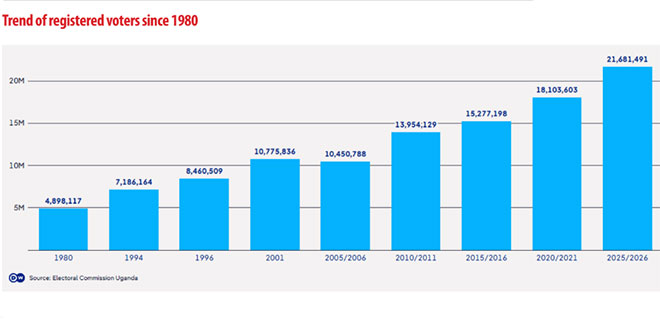
Polling stations are due to open at 7 a.m. on Thursday and close at 4 p.m., with anyone already in line allowed to vote. More than 21 million registered voters will cast ballots not only for the presidency but also for Parliament, electing 353 constituency lawmakers and 146 women representatives, one from each district.
A familiar leader, an unfamiliar challenger
Museveni first came to power nearly 40 years ago as the leader of a guerrilla movement that promised to restore stability and democracy after years of turmoil and dictatorship under Idi Amin. In his early years, he was celebrated internationally as part of a new generation of African leaders.
Over time, however, that image has faded. His long rule has been accompanied by repeated accusations of human rights abuses, corruption and the systematic weakening of political opposition. Constitutional changes removing presidential term limits and age limits cleared the way for him to continue running, making him the only leader most Ugandans have ever known.
Supporters credit him with maintaining relative stability in a volatile region and overseeing economic growth, however uneven. Museveni himself has argued that he remains the country’s indispensable guarantor of peace and development.
His main rival, Bobi Wine — whose real name is Robert Kyagulanyi — represents a very different political trajectory. Once a chart-topping musician known for songs about life in Kampala’s poorer neighborhoods, he has recast himself as a voice for Uganda’s young and urban population. He leads the National Unity Platform, now the largest opposition party in Parliament.
Bobi Wine finished second in the 2021 election, securing about 35 percent of the vote to Museveni’s 58 percent, a result that was followed by allegations of vote rigging and a harsh crackdown on opposition supporters. Since then, Bobi Wine and his allies say they have faced persistent harassment, arrests and restrictions on their activities.
A campaign under pressure
This year’s campaign has unfolded in a tense atmosphere. Opposition rallies have frequently been broken up by police or security forces, while activists have been detained on what rights groups describe as politically motivated charges. Bobi Wine’s campaign events, in particular, have been repeatedly disrupted, while those of the president have proceeded largely unhindered.
International observers and human rights organizations have raised alarms. United Nations experts have warned of what they call a “pervasive climate of fear,” and Amnesty International has accused authorities of using tear gas, beatings and arbitrary arrests in what it described as a “brutal campaign of repression”.
The government rejects those accusations, saying security measures are necessary to prevent violence and ensure a peaceful vote. Officials have emphasized that the military’s visible presence in Kampala is intended to support the police, not replace them.
An economy under strain
For many voters, the economy looms large. Uganda has one of the youngest populations in the world, with the majority under the age of 30, and youth unemployment remains stubbornly high. While average incomes have risen slowly since the pandemic, job creation has not kept pace with the growing number of young people entering the labor market.
Voters also cite poor infrastructure and persistent gaps in access to quality education and health care. At the same time, Uganda has avoided the sharp spikes in the cost of living that have fuelled unrest in some neighboring countries, easing some pressure on the incumbent government.
Corruption is another central concern. Uganda ranks 140th out of 180 countries on Transparency International’s Corruption Perceptions Index, with bribery and nepotism widely reported across public institutions. Opposition figures argue that corruption has become entrenched under Museveni’s long rule, while the government says it is taking steps to address the problem.
Whether Thursday’s vote will be free and fair remains a matter of debate. Uganda’s elections have long been contentious, and critics have repeatedly questioned the independence of the Electoral Commission.
Bobi Wine has urged his supporters to remain at polling stations after voting to help safeguard ballots, citing past allegations of tampering during vote transmission and tallying. However, Electoral Commission boss, Justice Simon Byabakama has called on voters to cast their ballots peacefully and then leave, saying counting will be transparent and monitored by party agents, the media and observers.
He said in the previous elections, the commission received reports of some people who stayed at polling stations simply to intimidate some voters from voting their choices of candidates.
“Once voters are perceived to prefer a particular candidate, they face intimidation before even entering the polling station,” he said last December. “Some of these areas are extremely congested, and the prescribed distance for polling station setups isn’t sufficient due to limited space. If all 600 registered voters at a station turn up and linger, it will be chaotic; they’ll either spill onto the roads or violate the 20-meter guideline.” Byabakama noted.
There are also concerns about the possibility of an internet shutdown, based on previous elections, which critics say would hinder independent verification of results. Bobi Wine’s party says it has developed a vote-monitoring application that can function using Bluetooth technology if internet access is restricted.
What happens next?
Vote counting is expected to begin at each polling station immediately after polls close, with results transmitted to a central tallying center. By law, the Electoral Commission must declare the presidential result within 48 hours of the end of voting, meaning an announcement is expected by Saturday afternoon if the process proceeds as planned.
To win outright in the first round, a candidate must secure more than 50 percent of the nationwide vote. Museveni has achieved that threshold in every election he has contested, avoiding a runoff each time.
Several other candidates are running, including Revolutionary People’s Party (RPP)’s Frank Bulira, National Peasants Party’s Robert Kasibante, Conservative Party’s Joseph Mabirizi, Forum for Democratic Change’s Nandala Mafabi, Alliance for National Transformation’s Mugisha Muntu and the Common Man’s Party’s Mubarak Munyagwa, though none are seen as posing a serious challenge to the two front-runners.
Veteran opposition leader Kizza Besigye, who has run against Museveni four times, is not on the ballot; he remains in jail on treason charges after his arrest in neighboring Kenya last year, charges he denies.
The post Ugandans go to the polls appeared first on The Independent Uganda:.